

Accumulation vs. Distribution: Shifting Your Portfolio Mindset at Age 60
By Dan Gould | Three Streams Financial — Independent, Fee-Only Fiduciary Advisor
The investment strategies that built your wealth during your 40s and 50s are the exact same strategies that could jeopardize your retirement security in your 60s. That’s exactly why shifting your portfolio mindset from accumulation to distribution is one of the most important — and most overlooked — adjustments high-net-worth families across the Kansas City metro need to make before their first retirement withdrawal.
This post will walk through:
- Why the “accumulation” mindset that served you for decades becomes a liability once you start drawing income
- How Sequence of Returns Risk can quietly cut years off your nest egg’s life
- The 3-part blueprint we use to help Overland Park families transition into retirement with confidence
Let’s get into it.
The Psychological Pivot of Retirement Planning
For nearly forty years, your financial goal has been singular and straightforward: accumulation. You measured success by how fast your total balance grew. You embraced market volatility because lower prices meant you could buy your favorite mutual funds at a discount.
However, hitting age 60 changes the rules completely.
As you approach retirement, you enter the distribution phase. In this phase, your primary objective shifts from growing a massive number to engineering a reliable, predictable stream of monthly cash flow. Failing to make this mental and structural shift is one of the most common mistakes high-net-worth families in the Kansas City metro make — and it’s closely related to another quiet risk we’ve written about: not falling behind on your retirement savings pace heading into this transition.
Why the “Buy and Hold” Strategy Becomes Risky
When you are actively drawing income from a portfolio, sudden market crashes are no longer a buying opportunity — they are a mathematical threat. This risk is even more pressing today given how elevated the Shiller CAPE ratio is heading into 2026, a signal that historically has preceded lower-than-average forward returns.
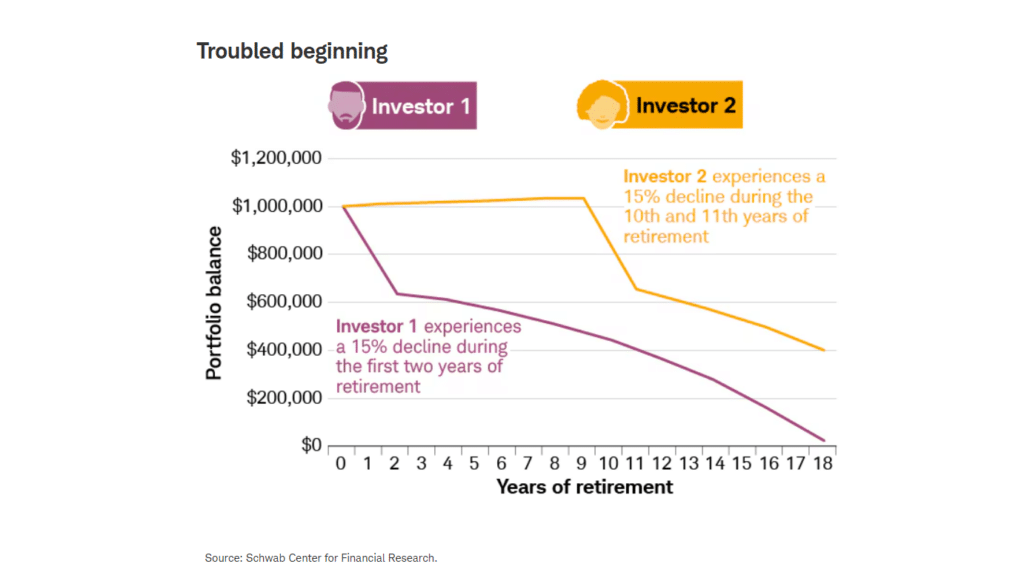
If the market drops 20% right as you begin taking retirement distributions, you are forced to sell equities at depressed prices to fund your lifestyle. This permanently destroys your principal capital, a phenomenon known as Sequence of Returns Risk. As Charles Schwab’s research on the topic explains, an investor who experiences a market decline early in retirement can run out of money far sooner than one who experiences the same decline later — even with identical average returns over time.
The chart below from Schwab shows what happens to two investors who start with $1 million portfolios, take initial withdrawals of $50,000 (with 2% inflation adjustments each year after), but then experience a 15% drop in portfolio value. The investor who faces such a decline early in retirement runs out of money far sooner than an investor who does so later.
To protect your lifestyle, your portfolio strategy must evolve away from volatile index-tracking and toward a disciplined income-generation framework. This is one reason the traditional 60/40 portfolio still falls short in 2026 for retirees who need dependable cash flow rather than a static asset allocation rule of thumb.
⚠️ The Sequence of Returns Trap
Taking a 4% withdrawal from a portfolio during a market up-year keeps your plan intact. Taking that same 4% withdrawal during a severe market down-year can permanently accelerate the depletion of your nest egg by up to a decade. Vanguard’s own research on retirement spending strategies notes that a fixed dollar-plus-inflation withdrawal like the classic “4% rule” carries real risk of outliving your savings if it isn’t adjusted for how the market is actually performing.
Your 3-Part Blueprint for a Confident Transition
Here’s the roadmap we walk Overland Park and Johnson County families through when they’re approaching this shift:
1. Define the Timeline
Determine your exact “gap years” — the time between your retirement date and the date your Social Security benefits or Required Minimum Distributions (RMDs) begin, and don’t overlook how Medicare eligibility at 65 factors into that timeline. If you still have a 401(k) sitting with a former employer, rolling it over correctly is often the first practical step before you can plan gap years with any precision. This is also the window we use for strategic Roth conversions when we build retirement income plans for clients retiring in their early 60s, and it’s worth mapping against how much you actually need to retire in Kansas before you lock in a date.
2. Build Liquidity Buckets
Isolate 2 to 3 years of living expenses outside the stock market in ultra-safe, liquid reserves to serve as your operational cash cushion. This is often called a “bucket strategy,” and as U.S. Bank notes in its guidance on managing retirement income through downturns, keeping essential expenses covered in cash means you never have to sell depressed investments just to pay this month’s bills. For the growth portion of the portfolio that stays invested, we also look at which equity investments best balance growth with lower volatility.
3. Deploy Dividend Growth
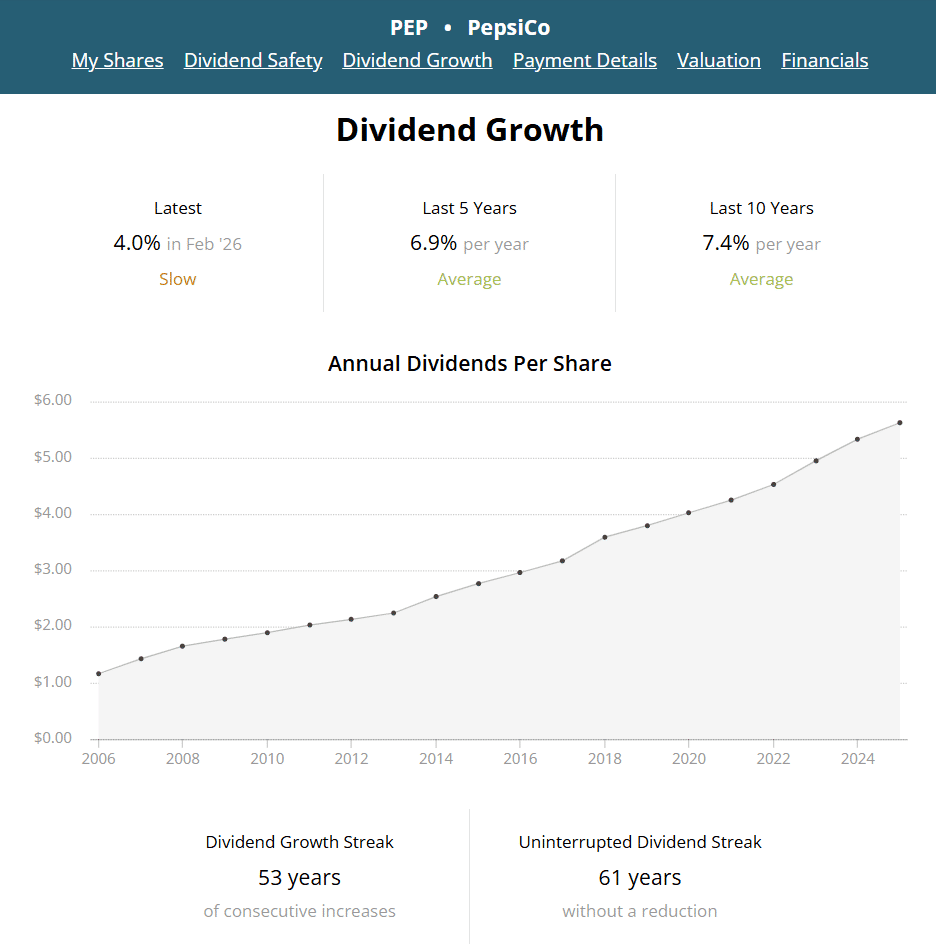
Reallocate core assets into high-quality Dividend Growth Stocks that deliver rising, recurring cash flow independent of daily market swings. Because these dividends are largely independent of price volatility, they can help fund your lifestyle without forcing a sale during a downturn. In fact, our case study on a $170,900-a-year retirement plan shows how this approach held up even when the market underperformed for 15 straight years — and the favorable tax treatment of qualified dividends is one more reason it pairs well with the senior tax advantages available in 2026.
Aligning Your Assets for a Secure Transition
Navigating this transition smoothly requires objective analysis. Because Three Streams Financial operates as an independent, fee-only fiduciary in Overland Park, we do not use your transition into retirement as an excuse to sell you illiquid, high-commission variable annuities. Instead, we work directly with families who have accumulated $300,000 to $500,000+ to mathematically map out a customized withdrawal strategy. Our focus is on ensuring your portfolio generates maximum net-of-tax income with minimum unnecessary risk.
Once you’ve made the mindset shift from accumulating to spending, the next question is sequencing. Read our full guide to the optimal withdrawal order to see how to avoid the biggest tax traps in retirement.
Key Takeaways
- Accumulation-phase habits (chasing growth, riding out volatility) can work against you once you start drawing income
- Sequence of Returns Risk means a downturn in your first few retirement years can do lasting damage a later downturn wouldn’t
- A 2-3 year liquidity bucket keeps you from being forced to sell stocks at a loss to cover living expenses
- Dividend growth stocks can provide recurring cash flow that isn’t tied to daily market swings
- Every family’s timeline and risk tolerance is different — this blueprint should be customized, not copy-pasted
Fee-Only Advice. Proven Process. Transparent Planning.
Remember, there’s no one-size-fits-all approach to retirement income planning. Conduct thorough research, consider your personal circumstances, and consult a fee-only fiduciary advisor before making changes to your withdrawal strategy.
Ready to Map Your Transition?
Don’t head into retirement relying on guesswork. Let’s build a concrete, stress-tested blueprint for your nest egg.
- Get Your Personalized Retirement Map — see exactly how your current accounts will hold up under a real withdrawal strategy
- Attend Our Upcoming Workshop — join us at the Overland Park Chamber of Commerce to learn how to build reliable, tax-advantaged income streams
Related Reading
This transition touches nearly every other part of your retirement picture. See Retirement Tax Strategies for Kansas City Families for how gap-year Roth conversions reduce your tax bill, How Growing Dividends Can Raise Your Safe Withdrawal Rate for more on why dividend growth pairs so well with distribution planning, and Your Fund’s Tax-Cost Ratio for how ongoing fund taxes eat into returns even before you retire. Or get in touch to review your own transition plan.

Hello, I’m Dan Gould, an independent fee-only advisor based in Overland Park, KS. I offer comprehensive financial services to individuals, families, professionals, and small business owners nationwide. With over 25 years of experience in institutional financial markets, I deliver proven portfolio management and retirement income strategies.