
Which Equity Investments Are Best for a Conservative Investor Who Wants Growth With Lower Volatility?
By Dan Gould | Three Streams Financial — Independent, Fee-Only Fiduciary Advisor
This is one of the most common questions I get from clients approaching or already in retirement: “I don’t want to sit entirely in bonds and cash, but I also can’t stomach another 2022 or 2008 in my stock allocation. Which equity investments are actually built for someone like me — a conservative investor who still wants growth, just without the wild swings?”
It’s a fair question, and it deserves a better answer than “just buy a target-date fund and don’t look.” The truth is there’s a whole category of equities designed for exactly this profile — lower-volatility, growth-with-guardrails investments that have historically delivered stock-like returns with meaningfully less drama along the way.
Which Equity Investments Are Best for a Conservative Investor Who Wants Some Growth but Lower Volatility?
The best equity investments for a conservative investor who wants some growth but lower volatility are dividend-growth stocks — particularly Dividend Aristocrats — held as 40–60% of the equity sleeve. These are S&P 500 companies with 25+ years of consecutive dividend increases, lower historical volatility than the broad market, and essential, recession-resistant businesses in sectors like utilities, healthcare, and industrials. Pairing this core with short-duration bonds and cash for the remainder of the portfolio further dampens swings while still capturing meaningful growth.
This post will cover:
- What “conservative but growth-oriented” actually means when you’re picking individual equities or funds
- Why dividend growers and Dividend Aristocrats are the core building blocks I use for this exact client profile
- Real examples from client portfolios across sectors — utilities, healthcare, industrials — that fit this mandate
- The mistakes that turn a “conservative” equity allocation into a hidden risk (chasing yield, ignoring valuation, over-concentrating in one sector)
Frequently Asked Questions
Which equity investments are best for a conservative investor who wants some growth but lower volatility?
For most conservative clients, I build the equity sleeve around a core of Dividend Aristocrats and similar dividend growers — typically 40–60% of the equity allocation. These are companies with 25+ years of consecutive dividend increases, lower historical volatility than the S&P 500, and essential, recession-resistant businesses (think utilities, healthcare, and industrials). See the full breakdown below.
Which alternative investments are best for a conservative investor who wants lower volatility?
Outside of equities, conservative investors typically pair a dividend-growth equity core with short-duration bonds and cash-equivalents to further dampen volatility. The right mix depends on your specific timeline and income needs — get a free Personalized Retirement Map for a plan tailored to your situation.
Want to see how a lower-volatility equity sleeve would look in your own portfolio? Get a free, no-obligation portfolio review.
A Sample Conservative Growth Portfolio: $750,000 Example
Numbers make this concrete. Here’s how I might structure the equity sleeve of a $750,000 conservative growth portfolio for a client in their early 60s who wants meaningful upside but can’t tolerate a 2008-style drawdown:
| Sleeve | Allocation | Dollar Amount | Example Holdings |
|---|---|---|---|
| Dividend Aristocrats & dividend growers (equity core) | 40–60% of equity sleeve | ~$180,000–$270,000 | Utilities, healthcare, industrials (e.g., water utilities, Zoetis, PPG) |
| Other quality equities / growth exposure | 40–60% of equity sleeve | ~$180,000–$270,000 | Diversified quality growth, sized to risk tolerance |
| Short-duration bonds & cash-equivalents | ~40% of total portfolio | ~$300,000 | Buffers against forced selling in a downturn |
These figures are illustrative starting points, not a recommendation — the right split depends on your income needs, timeline, and risk tolerance. Talk it through with Dan or grab a free Personalized Retirement Map for a plan tailored to your numbers.
What “Conservative but Growth-Oriented” Really Means in Equities
Every investor says they want “growth with lower risk.” Very few can define what that means in practice, so let me be specific. For conservative investors like the hard-working ones back home in Three Rivers, I’m looking for equities with three characteristics:
- Lower beta and lower realized volatility than the S&P 500 — meaning smaller peak-to-trough drawdowns during corrections.
- A durable, growing cash flow stream — usually visible through a long history of dividend increases — rather than a story stock priced on future hope.
- Reasonable valuation relative to the company’s own history, not just a low headline P/E, since an artificially cheap stock is often cheap for a reason.
That combination points you toward one specific corner of the equity market: high-quality dividend growth companies, and in particular, the Dividend Aristocrats — S&P 500 companies with at least 25 consecutive years of dividend increases. I wrote a full breakdown of why dividend aristocrats outperform during market volatility, but the short version is this: companies that have raised dividends through the 2008 crisis, the 2020 pandemic, and the recent inflation spike have already proven they can grow shareholder payouts in almost any environment. That track record is a far better volatility signal than any single valuation ratio.
The Core Holding: Dividend Aristocrats and Dividend Growers
For most conservative clients, I build the equity sleeve around a core of Dividend Aristocrats and similar dividend growers, typically 40–60% of the equity allocation. This isn’t a chase for the highest current yield — it’s a deliberate tilt toward businesses with defensive characteristics: essential products, dominant market positions, and the financial discipline required to keep raising a dividend for decades.
I recently laid out why 2026 looks like a particularly good entry point for this group. The short version: Aristocrats have lagged a narrow, AI-driven market rally, which has left a lot of high-quality, lower-volatility names trading at more reasonable valuations relative to their own history — exactly the setup a patient, conservative investor wants.
A few names that illustrate the profile, all of which I’ve added to client portfolios for this reason:
- Essential water utilities — regulated, recession-resistant demand, and a track record of steady payout growth.
- H2O America — another regulated-utility example with the low-volatility profile conservative investors are after.
- PPG Industries — an industrial dividend grower with pricing power and diversified end markets.
- Zoetis — a healthcare-adjacent compounder with non-discretionary demand (animal health) and a growing dividend.
Notice the pattern: regulated utilities, healthcare, and industrials with essential products. None of these are the sectors driving headline market volatility, and that’s the point.

Why This Approach Also Protects Your Income Plan, Not Just Your Nest Egg
A lower-volatility equity sleeve doesn’t just help you sleep at night — it also directly supports how much you can safely spend in retirement. I covered the mechanics of this in my post on how growing dividends can raise your safe withdrawal rate: when a meaningful share of your equity return shows up as a rising cash dividend rather than purely as price appreciation, you’re less dependent on selling shares into a down market to fund living expenses. That’s a subtle but important distinction for a conservative investor — it’s not just about smaller drawdowns; it’s about not being forced to realize them.
Mistakes That Quietly Turn “Conservative” Into Risky
Not every dividend-paying stock deserves a spot in a conservative portfolio. A few things I screen for before adding anything to a client account:
- Yield-chasing — an unusually high yield relative to sector peers is often the market pricing in a future dividend cut, not a bargain.
- Payout ratio — a dividend funded by growing earnings is very different from one funded by rising debt.
- Sector concentration — Dividend Aristocrats skew toward consumer staples, industrials, and healthcare, so this should be a core holding, not your entire portfolio. Pair it with other quality equities and, depending on your plan, some growth exposure sized to your actual risk tolerance.
- Valuation blindness — as I noted when the Shiller CAPE ratio sits well above historical norms, price still matters, even for defensive, high-quality businesses.
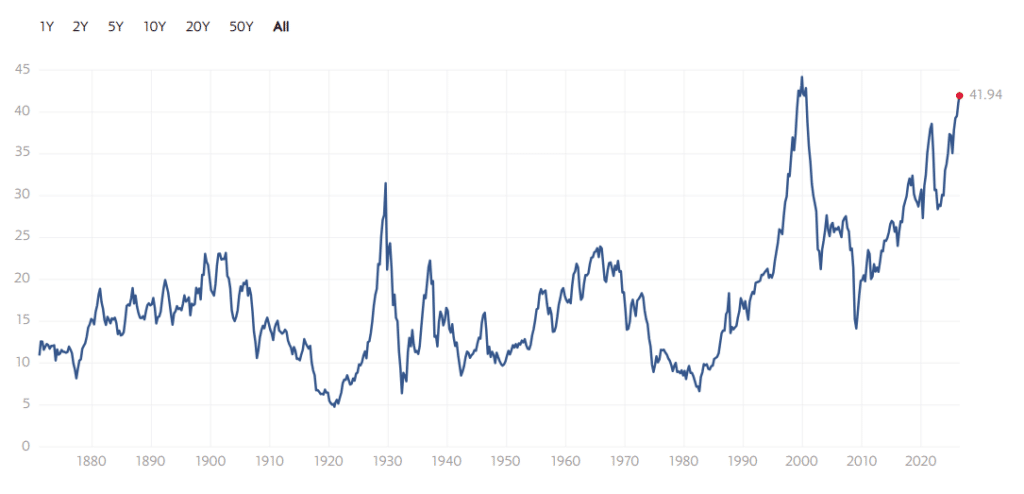
Buying a quality dividend grower because it’s temporarily out of favor is a very different decision from buying any stock just because it pays a dividend. The distinction is that many “conservative” portfolios quietly take on more risk than intended.
LEARN MORE AT OUR FREE DIVIDEND GROWTH WORKSHOP COMING UP SOON – CLICK HERE!
Key Takeaways
- Conservative doesn’t have to mean all-bonds — dividend growers and Dividend Aristocrats have historically offered stock-like growth with meaningfully lower volatility.
- The best fit for this profile: companies with 25+ years of dividend increases, reasonable valuations, and essential, recession-resistant demand.
- A rising dividend stream doesn’t just smooth returns — it can reduce how much you’re forced to sell into a down market, supporting a higher safe withdrawal rate.
- Watch for yield traps, rising payout ratios, and sector concentration — the label “dividend stock” alone isn’t a substitute for due diligence.
Fee-Only Advice. Proven Process. Transparent Planning
Remember, there’s no one-size-fits-all approach to investing. Conduct thorough research, consider your personal circumstances, and consult a fee-only financial advisor before making any investment decisions.
P.S. Not sure how much of your portfolio should sit in lower-volatility equities versus growth or fixed income? I’ve created a free Personalized Retirement Map that addresses all four critical areas: Income, Investments, Planning, and Legacy. No pitch, just clarity. → Get Your Free Personalized Retirement Map
Related Reading
For more on why traditional stock/bond splits fall short in today’s environment, see Why the 60/40 Portfolio Still Fails in 2026 and Dividend Growth Investing in 2026. Learn more about our investment management approach, or reach out to talk through your risk tolerance.
Interested in building a lower-volatility portfolio like this one in the Kansas City area? See our Kansas City investment management services.

Hello, I’m Dan Gould, an independent fee-only advisor based in Overland Park, KS. I offer comprehensive financial services to individuals, families, professionals, and small business owners nationwide. With over 25 years of experience in institutional financial markets, I deliver proven portfolio management and retirement income strategies.