

Feel Behind in Your Retirement Savings? 3 Steps to Take Now (2026 Update)
By Dan Gould | Three Streams Financial — Independent, Fee-Only Fiduciary Advisor
You’re not alone if you feel like you need to save more for retirement. Most people who work with me have felt exactly this way at some point — and I’ve felt it myself. The good news: feeling behind is common, but it’s rarely permanent. What actually determines your outcome isn’t how far behind you feel today — it’s what you do about it starting now.
Quick answer: If you feel behind on retirement savings in 2026, the three most effective moves are: (1) reduce large portfolio drawdowns to protect against sequence-of-returns risk, since markets remain historically expensive; (2) shift part of your portfolio toward dividend growth investing to build a rising, more tax-efficient income stream instead of relying purely on price appreciation; and (3) maximize 2026’s higher catch-up contribution limits — including new Roth catch-up rules for higher earners — paired with a deliberate, tax-efficient withdrawal strategy. None of these require taking on more risk to “catch up faster.”
This post will cover:
- Why avoiding large drawdowns matters more than chasing returns when you’re trying to catch up
- How dividend growth investing builds a rising income stream that can supplement Social Security
- What changed for 2026: catch-up contributions, Roth catch-up rules, and Social Security timing
- A simple 3-step framework you can start using this year
Step 1: Avoid Large Drawdowns to Limit Sequence-of-Returns Risk
Feeling behind in your retirement savings is common, but there is always time to take action. The instinct when you feel behind is to reach for higher returns — a more aggressive fund, a hot stock, a bigger bet. That instinct is understandable, and it’s usually the wrong move, especially with valuations where they are today. As I covered in our breakdown of the Shiller CAPE ratio, U.S. stocks have been trading at levels rarely seen outside of two periods in market history: right now, and the months before the dot-com crash.
Here’s the part that matters most if you’re behind: the timing and order of poor investment returns can do more damage to your retirement than the size of your account balance today. A large loss taken right before or early in retirement is far more damaging than the same loss taken ten years later, because you’re forced to sell more shares at depressed prices to fund the same withdrawal. This is sequence-of-returns risk, and it’s the single biggest reason “just take more risk to catch up” backfires for people close to retirement.
Reducing this risk doesn’t require predicting the next downturn. It requires structuring your portfolio so a downturn doesn’t do lasting damage:
- Know your correlation to the market. If most of your retirement savings sits in a handful of large-cap growth funds, you likely have more exposure to a market pullback than you realize.
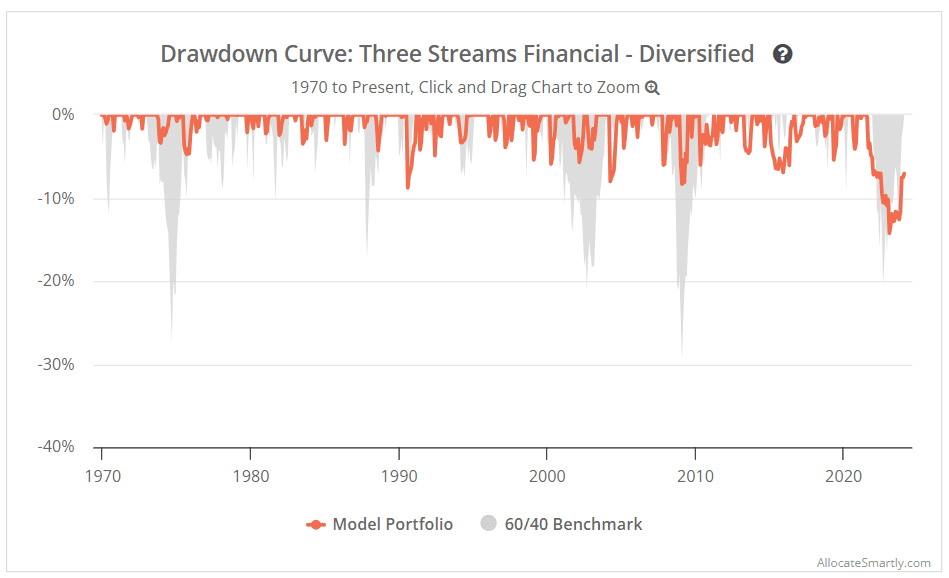
- Diversify across strategies, not just asset classes. Combining passive index exposure with active, defensively-oriented strategies — precisely the kind of blend that a traditional 60/40 portfolio no longer reliably provides — can reduce how far your portfolio falls in a downturn without requiring you to exit the market.
- Consider buffer ETFs for a portion of your portfolio. These are designed to absorb a defined amount of downside in exchange for capping some upside — useful for money you can’t afford to see drop sharply in the next few years.
The math behind this is straightforward: a portfolio that loses less during stressed markets has less ground to make up afterward, which means it compounds from a higher base for longer. “Losing less” consistently beats “picking winners” when your time horizon is shorter than it used to be.
This isn’t theoretical. During the 2008 financial crisis, this exact kind of protection was the difference between a shallow, recoverable drawdown and a decade spent rebuilding — see our 2008 Dividend Aristocrats case study for the specific numbers behind that comparison.
Step 2: Build Rising Income Through Dividend Growth Investing
If Step 1 is about protecting what you have, Step 2 is about making what you have work harder — without taking on speculative risk to do it. Dividend growth investing means holding companies with a long, consistent record of raising their dividend every year — not simply high-yield stocks, but businesses that have proven they can grow shareholder payouts through recessions, inflation spikes, and downturns alike.
For someone who feels behind, this approach offers three specific advantages:
- A reliable, rising income stream. In retirement, dividend income that grows every year helps cover living expenses without forcing you to sell shares in a down market.
- A built-in inflation hedge. A fixed-income bond pays the same coupon for 10, 20, or 30 years. A quality dividend grower’s payout has historically increased most years — even through recessions and market volatility — which matters far more once you’re actually living off the income.
- Reduced reliance on Social Security alone. Social Security is a valuable floor, but for most households it isn’t enough to fully fund the retirement they want. A growing income stream helps close that gap.
The mechanics are simple: you own shares of companies with a track record of dividend increases — the type of names covered in our Dividend Aristocrats research — and you reinvest the dividends while you’re still working. Early payouts are modest, but they compound. Over a couple of decades, that compounding is what turns a moderate starting position into a meaningful income stream, which is exactly the lever someone who started saving later in life needs. It’s also the mechanism behind a higher safe withdrawal rate in retirement — we walk through the math in How Growing Dividends Can Raise Your Safe Withdrawal Rate in Retirement.

None of this means abandoning diversification or betting your retirement on a handful of stocks. It means being deliberate about pairing growth exposure with an income engine that doesn’t depend on selling shares at the right moment — which brings a lot of the sequence-of-returns protection from Step 1 full circle.
Step 3: Maximize 2026 Catch-Up Contributions and Build a Tax-Efficient Withdrawal Plan
Beyond how you invest, 2026 brings real, dollars-and-cents tools specifically built for people who feel behind and are age 50 or older.
What’s different for 2026:
- Catch-up contribution limits have increased again for 2026 across 401(k), 403(b), and IRA accounts — and if you’ve recently changed jobs, make sure any old 401(k) balances were rolled over correctly so you don’t lose ground to avoidable taxes or penalties. Check the IRS’s current catch-up contribution page for the exact figures that apply to your plan type.
- SECURE 2.0’s Roth catch-up requirement is now in effect. Higher-earning employees (generally those who earned above the law’s indexed threshold from their employer in the prior year) must make their catch-up contributions as Roth dollars — after-tax now, tax-free in retirement — rather than pre-tax. This is a mandatory plan-design change many employer plans have had to adopt, and it changes the tax mechanics of catching up for higher earners specifically.
- Delaying Social Security still pays roughly 8% more per year you wait between full retirement age and age 70, on top of inflation adjustments — one of the few guaranteed, risk-free “returns” available to any retiree. See the Social Security Administration’s page on delayed retirement credits for the specifics of how this applies to your birth year.
These changes stack on top of several other 2026 tax updates for retirees and seniors — see our full rundown in Tax Advantages for Seniors and Retirees in 2026. Contributing more is also only half the equation — how you eventually withdraw those savings matters just as much. This is often the moment savers need to shift their entire mindset, from accumulating assets to living off them, a transition we cover in Accumulation vs. Distribution: Shifting Your Portfolio Mindset at Age 60. A tax-efficient, flexible withdrawal strategy (drawing less during downturns, more during strong years, and coordinating which accounts you tap first) can meaningfully extend how long your money lasts. We covered the full mechanics of this in How to Pay Less Tax in Retirement: The Optimal Order of Account Distributions — it’s worth reading alongside this post, since the two strategies (catching up now, withdrawing wisely later) reinforce each other.
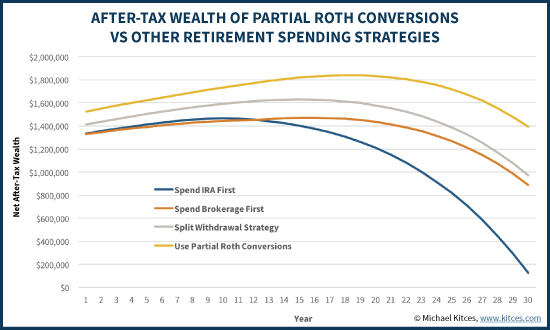
You may be starting with less in your account balance than you’d like — but how you take money out can matter just as much as how much you put in.
The 3-Step Catch-Up Framework, Summarized
- Audit your current portfolio’s downside exposure and reduce concentration in any single strategy or sector that could produce an outsized drawdown.
- Redirect a portion of new contributions toward dividend growth holdings to start building a rising, second income stream alongside your growth assets.
- Max out 2026’s catch-up contribution limits if you’re 50 or older, understand whether the Roth catch-up mandate applies to you, and pair it with a written, tax-aware withdrawal plan for when you retire.
We help clients build exactly this: a portfolio designed to minimize drawdowns, an income strategy that grows over time, and a written retirement withdrawal plan that makes the most of what you’ve saved — whether you manage the investments yourself or have us manage them for you. If you’re vetting advisors as part of this process, see our guide on what to actually ask a fiduciary before hiring one.
Frequently Asked Questions
What should I do first if I feel behind on retirement savings?
Start by reducing large drawdown risk in your current portfolio rather than adding risk to chase higher returns. A loss taken close to retirement is far more damaging than the same loss taken a decade earlier, so protecting your existing balance is usually the highest-leverage first move.
Can dividend growth investing really help someone catch up on retirement savings?
Yes, though not by producing outsized returns — it works by building a rising income stream that compounds over time and reduces how much you need to rely on selling shares or on Social Security alone. The earlier dividends are reinvested, the more this compounding effect helps someone who started saving later.
What changed with catch-up contributions in 2026?
Catch-up contribution limits for savers 50 and older increased again for 2026, and SECURE 2.0’s Roth catch-up requirement is now in effect — higher-earning employees above the law’s income threshold must make catch-up contributions as after-tax Roth dollars rather than pre-tax. Check the IRS’s retirement topics page for the exact limits that apply to your specific plan.
Is it too late to catch up on retirement savings in my 50s or 60s?
No. Higher catch-up contribution limits, the option to delay Social Security for roughly 8% more per year of delay, and a properly sequenced withdrawal strategy in retirement can meaningfully close a savings gap even for someone starting in their 50s or early 60s. The biggest risk isn’t a late start — it’s taking on excessive investment risk trying to catch up faster than a sound plan allows.
Key Takeaways
- Feeling behind is common — the real risk is taking on more investment risk to chase a faster catch-up, not the late start itself.
- Reducing large drawdowns protects against sequence-of-returns risk, which matters more than ever with markets historically expensive in 2026.
- Dividend growth investing builds a rising, more tax-efficient income stream that compounds over time and reduces reliance on Social Security alone.
- 2026’s higher catch-up contribution limits, the new Roth catch-up rule for higher earners, and delayed Social Security credits are concrete tools available right now.
Fee-Only Advice. Proven Process. Transparent Planning.
Remember, there’s no one-size-fits-all approach to investing. Do your research, carefully consider your personal circumstances, and consult a fee-only fiduciary advisor before making investment or withdrawal decisions.
Related Reading
See why 2026 specifically is a pivotal year to act in Still Feel Behind in Retirement Savings? Why 2026 Is the Year to Take Action, and read the mechanics of sequencing withdrawals in How to Pay Less Tax in Retirement. See a real example in our $150,000-a-Year Retirement Income Case Study, or check How Much Do I Need to Retire in Kansas? for a broader look at setting your target number. Learn more about our retirement income planning process, get a free Personalized Retirement Map, or get in touch to build your own plan.

Hello, I’m Dan Gould, an independent fee-only advisor based in Overland Park, KS. I offer comprehensive financial services to individuals, families, professionals, and small business owners nationwide. With over 25 years of experience in institutional financial markets, I deliver proven portfolio management and retirement income strategies.