

Why Now Is a Good Time to Look at Dividend Aristocrats
By Dan Gould | Three Streams Financial — Independent, Fee-Only Fiduciary Advisor
Here’s a number that gets my attention: a large chunk of this year’s S&P 500 gain has come from a handful of AI-related technology names, while the broader market trades at valuation levels rarely seen outside of 1999 and the years right before past drawdowns. Meanwhile, a group of 69 unglamorous, dividend-raising companies has quietly kept doing what it’s done for decades — growing shareholder payouts — without getting much credit for it.
That gap between “exciting” and “reliable” is exactly why I think 2026 is a good moment for long-term investors to take a fresh look at Dividend Aristocrats — S&P 500 companies with at least 25 consecutive years of dividend increases.
This post will cover:
- Why Aristocrats have lagged the broader market and what that means for entry points today
- How the rate-cutting cycle could work in favor of dividend-paying stocks over the next 12–24 months
- What the record-setting 2026 Aristocrats list tells us about the durability of this group
- The risks to watch so you don’t mistake a long streak for a guarantee (hint: valuations matter)
If you want the case for why Aristocrats hold up better during volatility, I covered that in a previous post. This one is about timing — why the setup for adding to these positions looks unusually favorable right now.
The Valuation Gap: Aristocrats Haven’t Kept Up With the AI Rally — and That’s the Opportunity
Dividend Aristocrats have returned as much as the S&P 500 over most long periods. They have done so with much less volatility. But that pattern has recently broken down. Investors are piling into mega-cap tech and AI-related stocks. The Aristocrats index is not tech-heavy like the S&P 500. It has fallen behind.
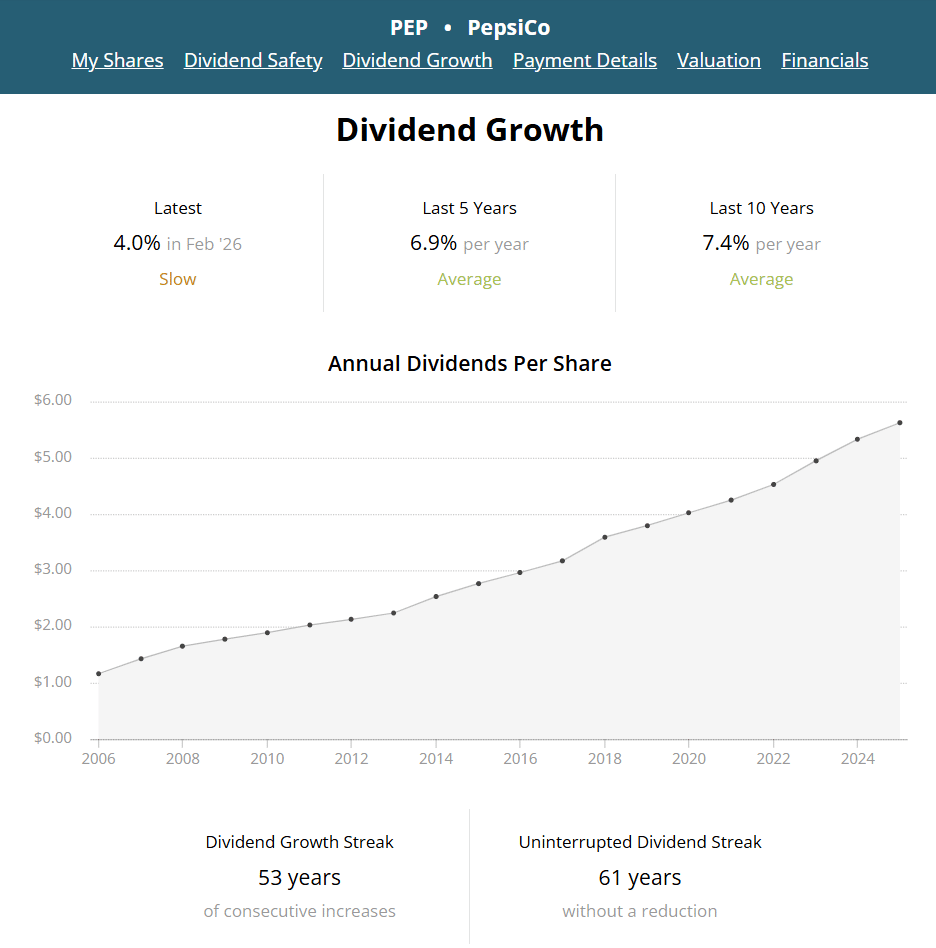
I don’t see that as a red flag on the Aristocrats. I see it as a pricing gap. The broader market is highly valued, with metrics like the Shiller CAPE ratio near dot-com peak levels (41.94 currently). This implies that much of the future growth is already priced into today’s leaders. Dividend Aristocrats are mostly in consumer staples, industrials, and healthcare (think Pepsi, Hormel, J&J). These sectors have not joined the AI-driven surge. Many trade at reasonable price-to-earnings ratios compared to their own history.
When a high-quality business with a 25-plus-year track record of raising its dividend trades at a discount simply because it isn’t a momentum stock, that’s the kind of setup that fee-only advisors like me get excited about.
The Rate-Cut Backdrop Historically Favors Dividend Payers
Interest rates matter enormously to how dividend stocks are priced. When bond yields are high, income investors have an easy alternative to stocks, and dividend-paying equities — especially utilities and REITs within the Aristocrats — face real competition for capital. When rates fall, the math flips: growing dividend streams become more attractive relative to fixed income, borrowing costs ease for companies carrying debt, and valuations for income-oriented stocks have historically expanded.
We’re in the early-to-middle innings of exactly that shift. The Federal Reserve has already delivered a meaningful round of rate cuts since 2024, and while the path forward isn’t guaranteed — a new Fed chair and mixed inflation data mean the timing of further cuts is genuinely uncertain — the broader direction of travel over the last two years has been toward easier policy, not tighter. That’s a tailwind, not a headwind, for the income side of a portfolio.
To be clear: I’m not suggesting anyone try to time the next Fed meeting. I am suggesting that adding quality dividend growers while that tailwind is still building, rather than after it’s fully priced in, is a reasonable long-term strategy.
A Record List, and Dividend Growth Is Accelerating
The 2026 Dividend Aristocrats list has 69 companies. Three were added in the last cycle. At least one more, a large regulated utility, could qualify soon. This is not a shrinking club. It is a growing one. That shows the resilience of this model even through high rates, tariffs, and inflation.
Just as encouraging: the pace of dividend increases across the group has been picking up recently, not slowing down. Companies don’t accelerate their payout growth when they’re worried about the future — they do it when free cash flow and balance sheets support it.
What to Watch Out For: Not Every Aristocrat Deserves a Buy Right Now (Valuation Matters!)
A long streak of dividend increases is a quality signal, not a guarantee. Aristocrat status has been lost before. A dividend freeze, not just a cut, removes a company from the index. This has happened to well-known companies in the past. A few things I screen for with clients before adding to a position:
- Payout ratio — a dividend funded by earnings is very different from one funded by rising debt.
- Competitive moat — companies with strong, durable competitive advantages have historically been far less likely to cut than “no-moat” businesses with a long streak but weaker fundamentals.
- Valuation, not just yield — an unusually high yield relative to a company’s sector peers is often the market pricing in a future cut, not a bargain.
- Sector concentration — the Aristocrats index skews heavily toward consumer staples and industrials, with almost no technology exposure, so it shouldn’t be your only holding.
Buying a quality compounder because it’s temporarily out of favor is a very different decision than buying any stock just because it has a long dividend streak. The distinction matters.
***LEARN MORE AT OUR FREE DIVIDEND GROWTH WORKSHOP COMING UP SOON – CLICK HERE!***
How I’d Approach Adding Aristocrats to a Portfolio Right Now
For most retirement-focused clients, I don’t recommend chasing the AI rally as a core holding, nor do I recommend backing up the truck on any single Aristocrat. A more measured approach:
- Dollar-cost average into positions rather than trying to pick the exact bottom — nobody rings a bell at the ideal entry point.
- Diversify across sectors within the Aristocrats list (staples, industrials, healthcare, financials) to avoid concentration risk.
- Prioritize wide-moat, reasonably valued names over the highest current yield.
- Treat this as a multi-year allocation decision, not a trade — the case here is about being early to a valuation and rate-cycle shift, not about a quick bounce.
Dividend Aristocrats Face Upcoming Tests While Extending Payout Growth Streaks
Even as the 2026 Aristocrats list sets a record for membership and payout growth accelerates, this group of dividend aristocrats faces upcoming tests as it extends payout growth streaks — from tariff-driven input costs to sector-specific pressure in healthcare and consumer staples. A long streak of increases doesn’t mean a company is immune to a tough earnings year; it means the business has historically found a way to keep raising the dividend anyway. That’s the distinction long-term, income-focused investors should watch for heading into 2027.
Key Takeaways
- Dividend Aristocrats have lagged a narrow, AI-driven S&P 500 rally, creating a valuation gap for a group of companies with 25+ years of proven dividend growth.
- The multi-year shift toward lower interest rates has historically supported dividend-stock valuations, even though the near-term path of rate cuts remains uncertain.
- The 2026 Aristocrats list is at a record 69 companies with an accelerating average dividend growth rate — a sign of underlying business strength, not weakness.
- Not every Aristocrat is a buy today — payout ratio, moat, and valuation still matter more than the length of the streak alone.
Fee-Only Advice. Proven Process. Transparent Planning
Remember, there’s no one-size-fits-all approach to investing. Conduct thorough research, consider your personal circumstances, and consult a fee-only financial advisor before making any investment decisions.
P.S. Want to see exactly where you stand? I’ve created a free Personalized Retirement Map that addresses all four critical areas: Income, Investments, Planning, and Legacy. No pitch, just clarity. → Get Your Free Personalized Retirement Map
Want to see Dividend Aristocrats at work inside a full retirement plan? Read our case study on building a $150,000-a-year retirement income plan by age 62.
If you’re worried you’ve started saving too late, Dividend Aristocrats are one of the tools we lean on most. See how they fit into a full catch-up plan: Still Feel Behind in Retirement Savings? Why 2025 Is the Year to Take Action.
Related Reading
See how Dividend Aristocrats held up during the 2008 crash in what the 2008 drawdown teaches us about investing at today’s valuations, and read our broader strategy in Dividend Growth Investing in 2026. Learn more about our investment management approach, or get in touch.

Hello, I’m Dan Gould, an independent fee-only advisor based in Overland Park, KS. I offer comprehensive financial services to individuals, families, professionals, and small business owners nationwide. With over 25 years of experience in institutional financial markets, I deliver proven portfolio management and retirement income strategies.